

Whether you are a beginner or an experienced angler, a week of Atlantic salmon fishing on the Delay River stays in your memory for a long time.
Before this adventure, most of my fishing in Québec had been on lakes — at Meekos and Notawissi — and on rivers on the North Shore late in the season at La Corneille. Wonderful memories already. But let me say it straight: that week on the Delay took me into a completely different world of fishing.
Here, everything begins before the first cast. Simply getting there is already an adventure.
Getting to the Delay River: the adventure starts in the air
An early morning departure from Montréal, then about two hours of flying due north to Kuujjuaq. Kuujjuaq is the largest community in Nunavik, with roughly 3,000 residents. Already, the Québec you know from the St. Lawrence Valley feels far behind.
From Kuujjuaq, the options are simple: snowmobile in winter; the rest of the year, aircraft.
So we boarded a private Twin Otter to reach the fishing camp. The plane lands on a short dirt runway a few hundred metres from the lodge. The moment you step off, you understand you have changed worlds.
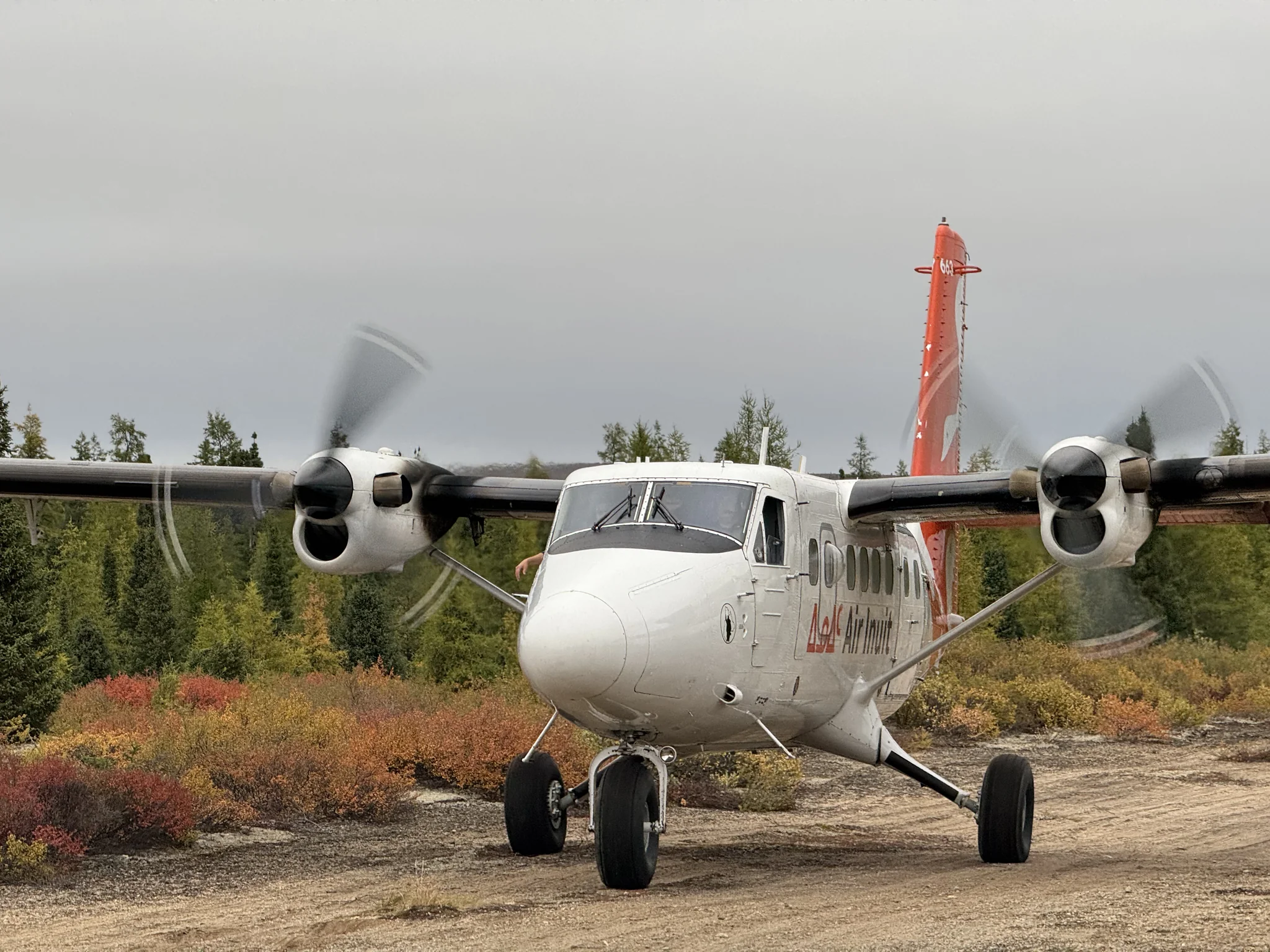
What strikes you first is the vastness. Then the solitude. Even Google Maps seems unsure where to place you: a tiny dot in the middle of Nunavik, surrounded by water, rock, tundra and silence.
For a European traveller used to roads, nearby villages and inhabited landscapes, arriving on the Delay brings a rare feeling: being truly at the ends of the earth.
A comfortable camp in the heart of wild nature
The camp is completely isolated, yet it offers everything needed for a comfortable week of fishing. Several cabins for four to six guests, plus a lodge with a bar, warm common areas and even a very decent internet connection.
The camp was built in 1997. Hundreds of floatplane rotations to bring in materials — that gives you an idea of what it took, humanly and logistically.
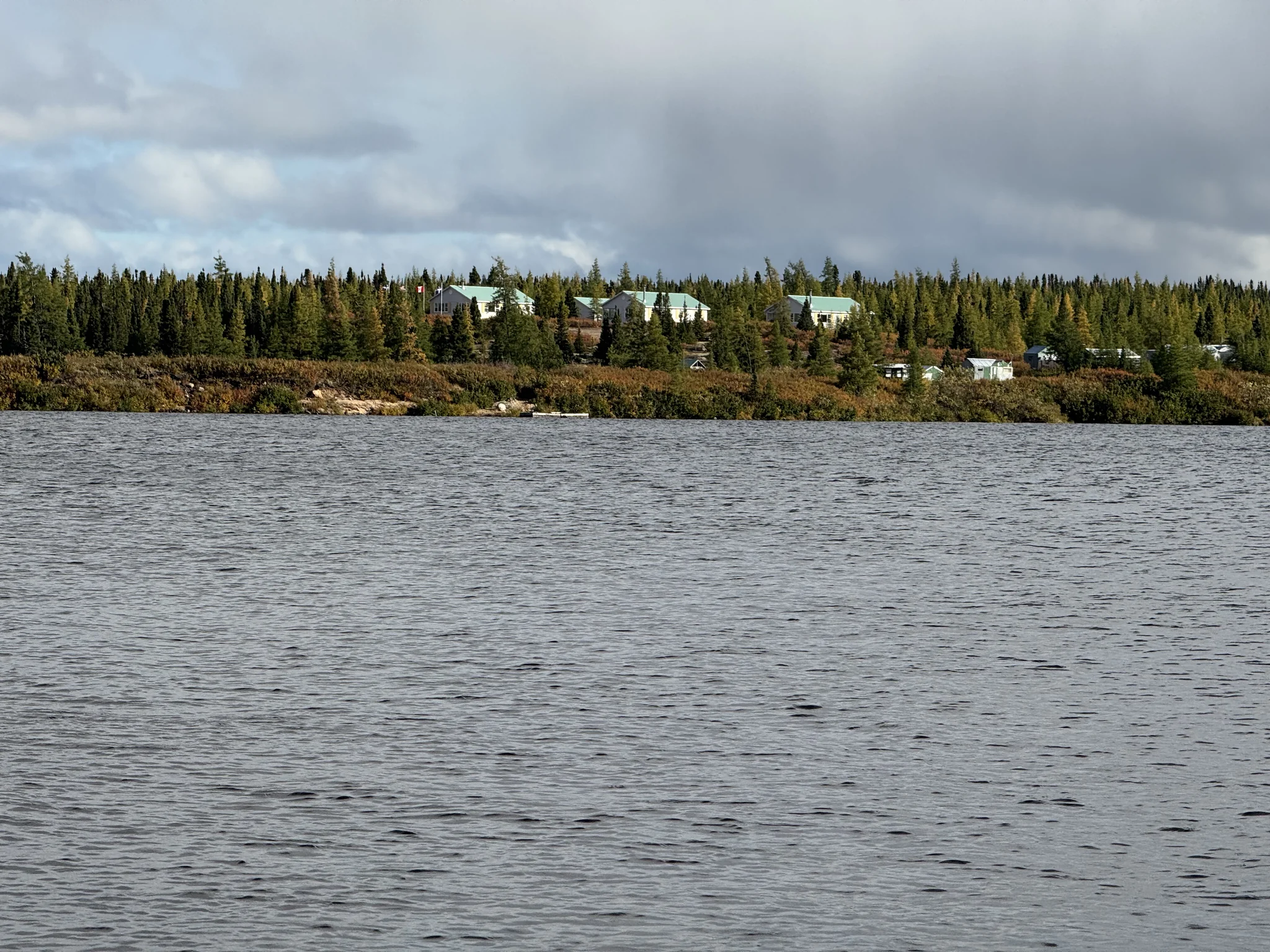
From the camp, a few trails let you walk for 15 or 20 minutes around the buildings. Caribou tracks appear by the dozen. And above all, you overlook the immense Delay River.
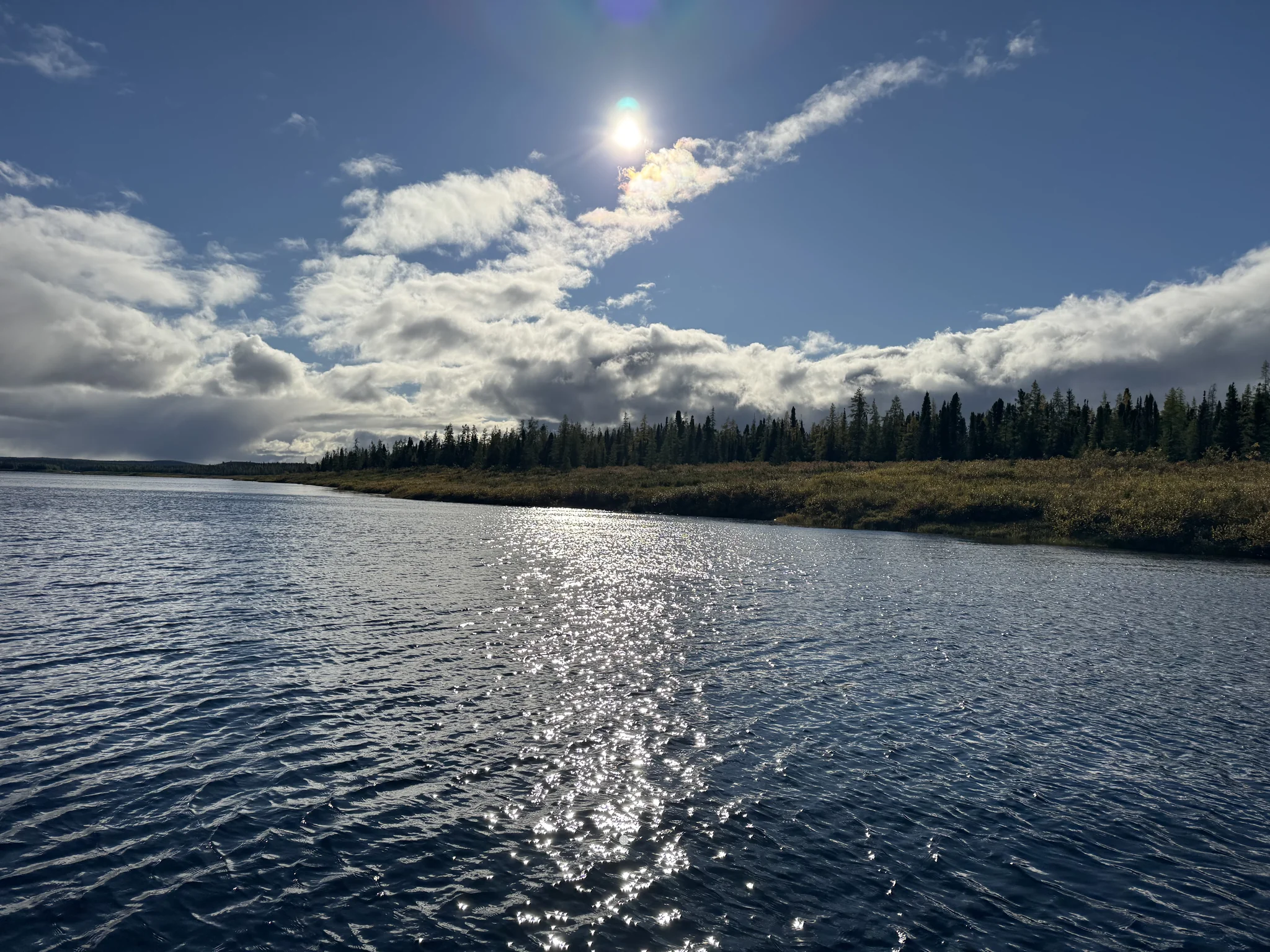
Wide, majestic, powerful — it commands respect immediately. It offers a great variety of fishing sectors: some reachable in 15 minutes by canoe, others nearly an hour upstream or downstream from camp.
Following the current with your eyes, you start to dream. Kuujjuaq lies some 150 kilometres farther downriver. Could you reach it that way? Probably. A real adventure to plan someday, perhaps.
A typical day of fishing on the Delay
Days start calmly but seriously. Up around 8 a.m., a solid breakfast, then off with a guide and a fishing partner.
We board large wooden canoes, about six or seven metres long. Each day, the sector depends on river level, weather, conditions and above all the guides' experience.
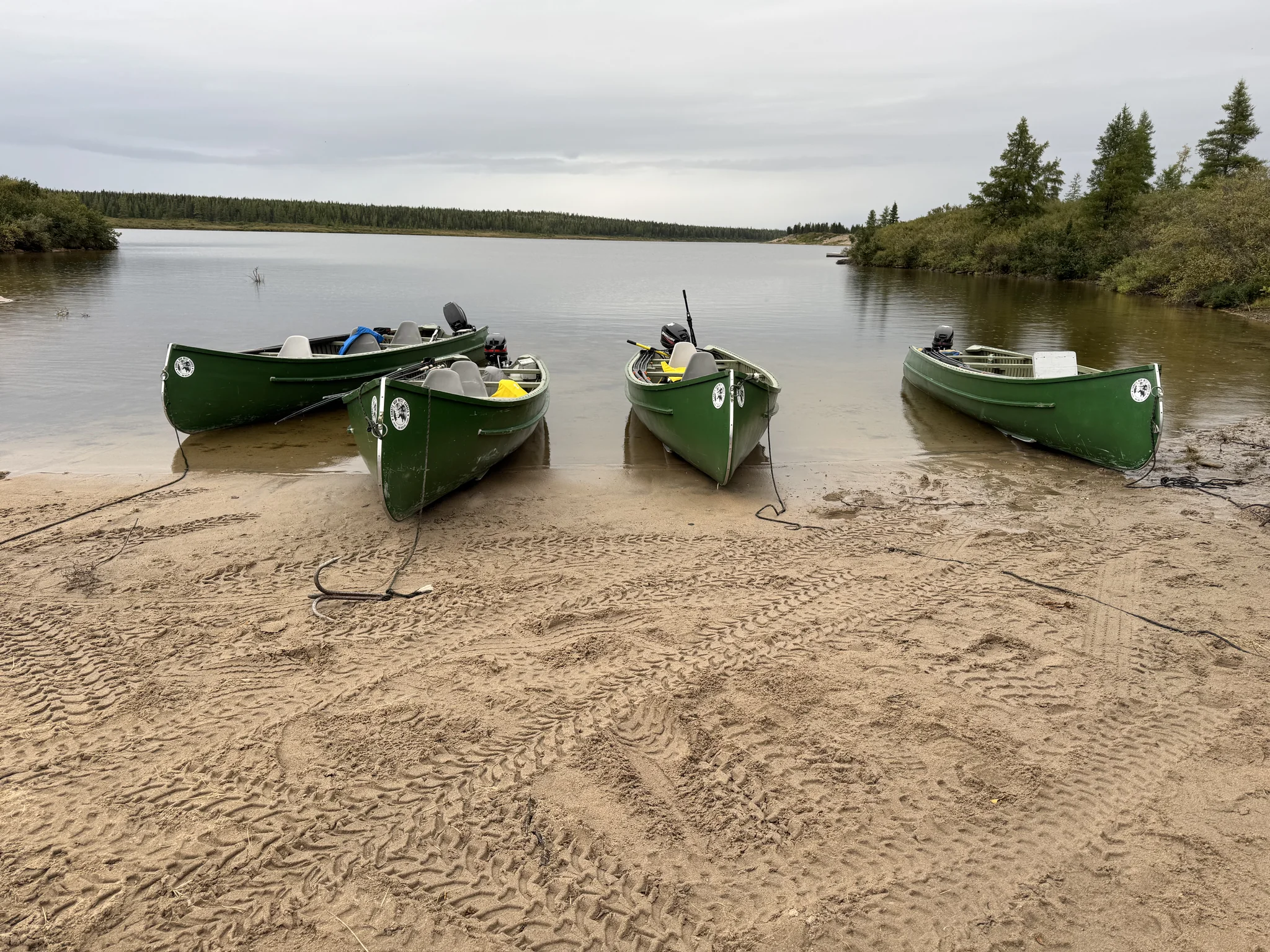
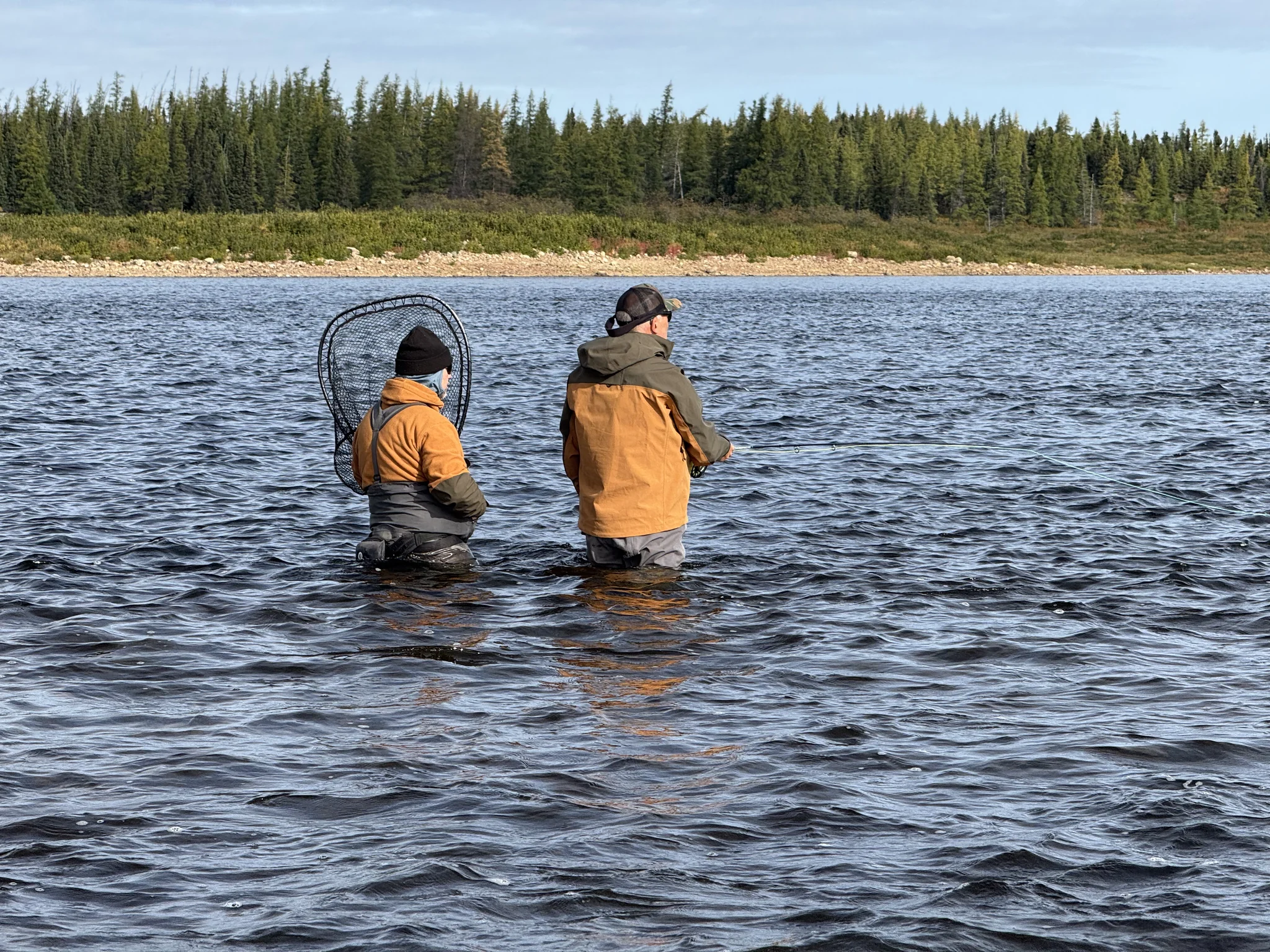
Some spots are mid-river. Others are along the banks, with water up to your ankles, knees, sometimes your waist.
Gradually you learn the good rocks, the current seams, the salmon pools. You discover the river piece by piece, as if it reveals its secrets one at a time. The landscape keeps changing: sky, tundra and water compose different colours every hour.
At midday, two options. Return to the lodge for lunch, sometimes with a 30-minute nap. Or a lunch box eaten on the boat, on the bank or in a small wooden cabin an hour upstream.
Back at camp around 5 p.m. Long fishing days, yet none felt too long. Your mind moves naturally between focus, contemplation and conversation with the guide.
You are disconnected from the modern world, yet deeply connected to the landscapes, the river and nature. Time passes differently.
The art of fly fishing
Fly fishing is a school of patience. It is also a sport. And very quickly you understand it is an art.
From afar, the cast looks simple, fluid, almost obvious. In practice, it is far more demanding. Flies land two metres ahead of you, snag your cap or end up in a bush behind the bank.
So you watch more experienced anglers. You listen to the guide. And above all, you try again. Again and again.
With practice, the motion becomes more natural. Your arm and elbow may be a little sore the next morning, but progress is real. You gain fluidity, then distance. You cover a wider stretch of river more precisely — and your chances of hooking a fish rise.
Each day brings its reward: several strikes, fish lost a few metres from the net, trout released, moments of waiting, doubt, then excitement.
And all along, one thought often returns: the incredible journey of these Atlantic salmon. They went to sea to feed, then return after several years to their home river to spawn. A journey of thousands of kilometres that gives each encounter an almost mythical dimension.
My first Atlantic salmon
When you hook a respectable salmon, you feel it immediately. It pulls hard. Very hard. The fight becomes physical. The fish jumps out of the water, sometimes several times, trying to break free. You alternate reeling and letting line run, tiring the salmon without rushing it, keeping your feet planted, resisting the current, staying focused.
Little by little, you bring it closer.
My fight lasted about 15 minutes. The salmon jumped out of the water a dozen times before my guide finally slipped the net under it.
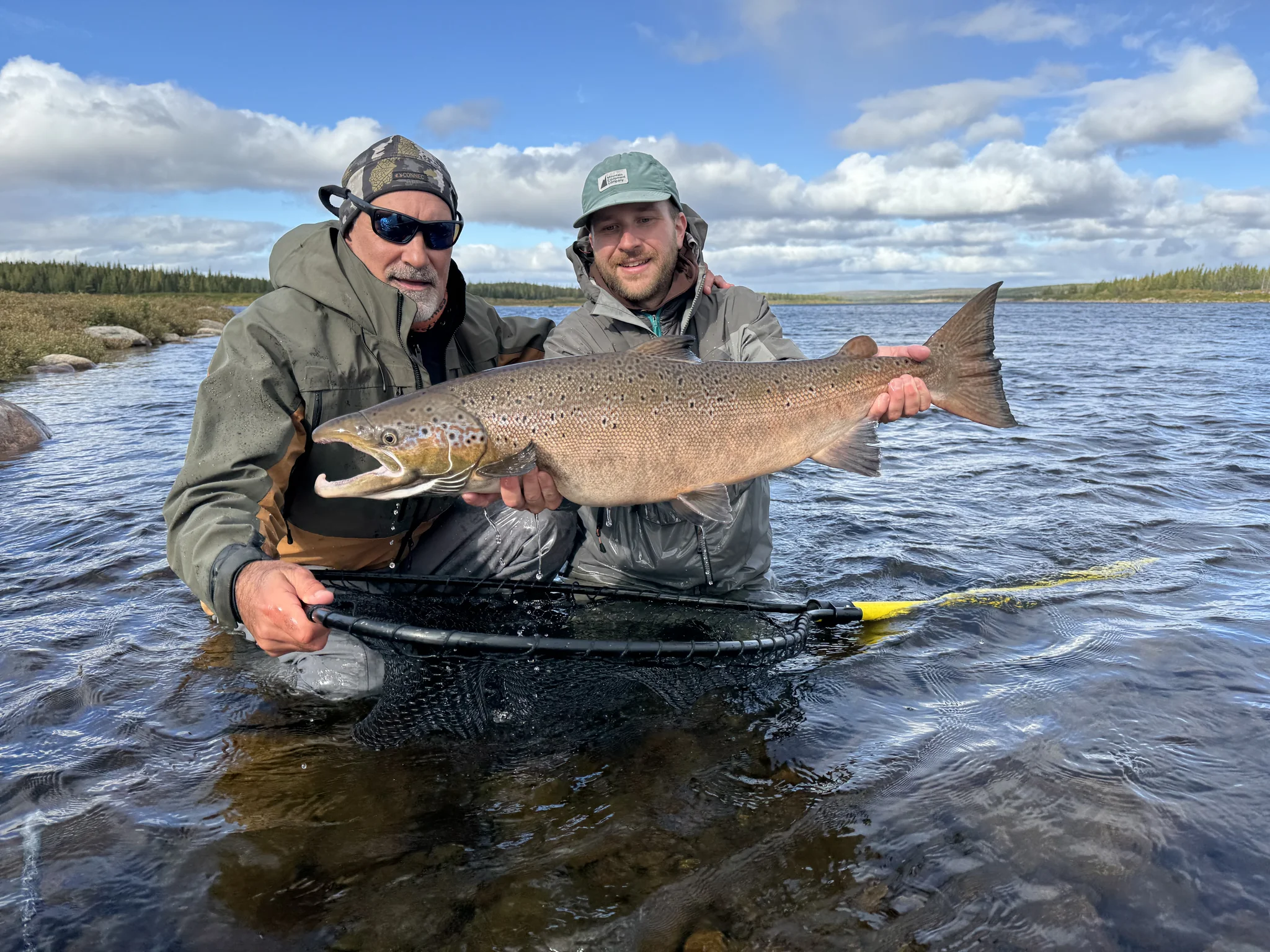
At that moment, the smile comes on its own. Satisfaction, of course. Real pride too — after all, it was my first Atlantic salmon.
We take a few photos to capture the moment. The salmon held carefully in both hands. Then we release it facing the current, gently, and watch it regain strength.
Watching it swim away to live its life in the river is almost as powerful as catching it.
A fishing trip, but also a story of encounters
A week in such an isolated place leaves time to talk, discuss and share.
First, your fishing partner. For me, Martin, who introduced me to Québec and countless outdoor activities at the outfitters.
There are friends too, like Charles and Jean-Christophe, business partners at another magnificent site to discover on the Saguenay fjord.
And of course the guides, plus the whole camp team, attentive to meals, comfort and the overall atmosphere of the stay.
A special mention goes to Paul Ostiguy, who runs this camp, knows Nunavik deeply and makes this kind of trip exceptional. In such a remote setting, the human quality of those who accompany you makes all the difference.
Why this trip marks a European traveller so deeply
For a European who dreams of wide open spaces, the Delay River offers an experience that is hard to compare. The distances, the isolation, the air logistics, Atlantic salmon, caribou tracks, the changing light of Nunavik — all of it forms something rare. A fishing trip, yes. But above all an immersion in raw, barely inhabited, still-living nature.
This kind of trip suits those who want more than a classic angling holiday. Nature, patience, encounters and disconnection are as much part of the experience as the salmon itself.
And after?
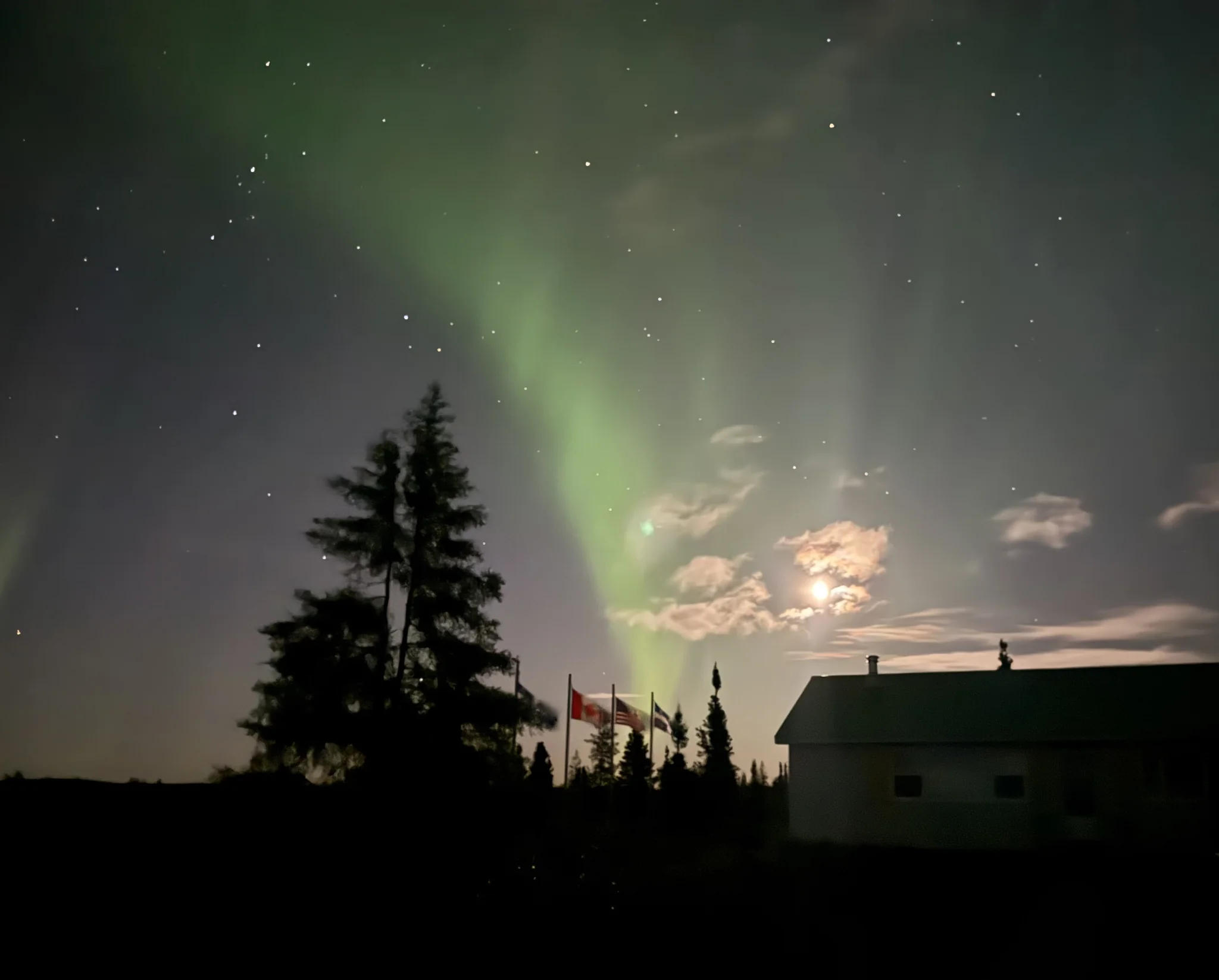
After a week like that, one thing is certain: I will return. For the northern lights, frequent at these latitudes. And especially to witness the caribou migration — hundreds of animals crossing the camp. You have to see that at least once in a lifetime. I also want to bring friends and let them live what I lived.
Above all, I want to keep exploring Québec and its endless nature.
There is so much to do.
To discover more fishing, hunting and nature adventures in Québec, Mitik Nature guides travellers in planning authentic, guided trips tailored to your wishes.
Discover nature trips in Québec at mitiknature.com
THIERRY'S READING SUGGESTIONS:
Les Inuits du Nunavik, Terre, histoire et société : https://shorturl.at/dDQ4h

'/%3e%3cpath%20d='M19.0957%209.92969L25.1657%2015.9997L19.0957%2022.0697'%20stroke='white'%20stroke-width='1.5'%20stroke-miterlimit='10'%20stroke-linecap='round'%20stroke-linejoin='round'/%3e%3cpath%20d='M8.16602%2016H24.996'%20stroke='white'%20stroke-width='1.5'%20stroke-miterlimit='10'%20stroke-linecap='round'%20stroke-linejoin='round'/%3e%3cdefs%3e%3clinearGradient%20id='paint0_linear_40000784_6671'%20x1='1.38396'%20y1='32'%20x2='31.1276'%20y2='1.33333'%20gradientUnits='userSpaceOnUse'%3e%3cstop%20stop-color='%23FDB62F'/%3e%3cstop%20offset='0.498405'%20stop-color='%23CF9033'/%3e%3cstop%20offset='1'%20stop-color='%23FDB62F'/%3e%3c/linearGradient%3e%3c/defs%3e%3c/svg%3e)