

By Stéphane Boulay
I have been hunting small game, especially partridge, for a few years now. Long enough to understand that it has its habits. Trail edges are part of that. Early morning too. For the rest, I learn by walking, and I will probably keep learning for quite a while.
This autumn, I went back with Martin, David and Geneviève. Friends and outdoor companions for a long time. Three days of hunting at Notawissi outfitter, in the Laurentian Highlands. An outfitter in the Mitik Group: more than 200 km² of exclusive rights, a handful of kilometres from Sainte-Anne-du-Lac. On territory this size, three days go fast.
When we arrived on Friday, we met at the main lodge around a meal. The food there is excellent. It is also the only dinner of the stay we do not cook ourselves, which gives it a little departure feel. The stay really begins there. Well before the trails, maps on the table, the first walk in the woods.
The territory: enough ground to never repeat the same route
Notawissi is north of Mont-Laurier. From Montréal, take Highway 15, Route 117 to Mont-Laurier, then Route 309 toward Sainte-Anne-du-Lac. From Ottawa, join Route 309 north of Mont-Laurier.
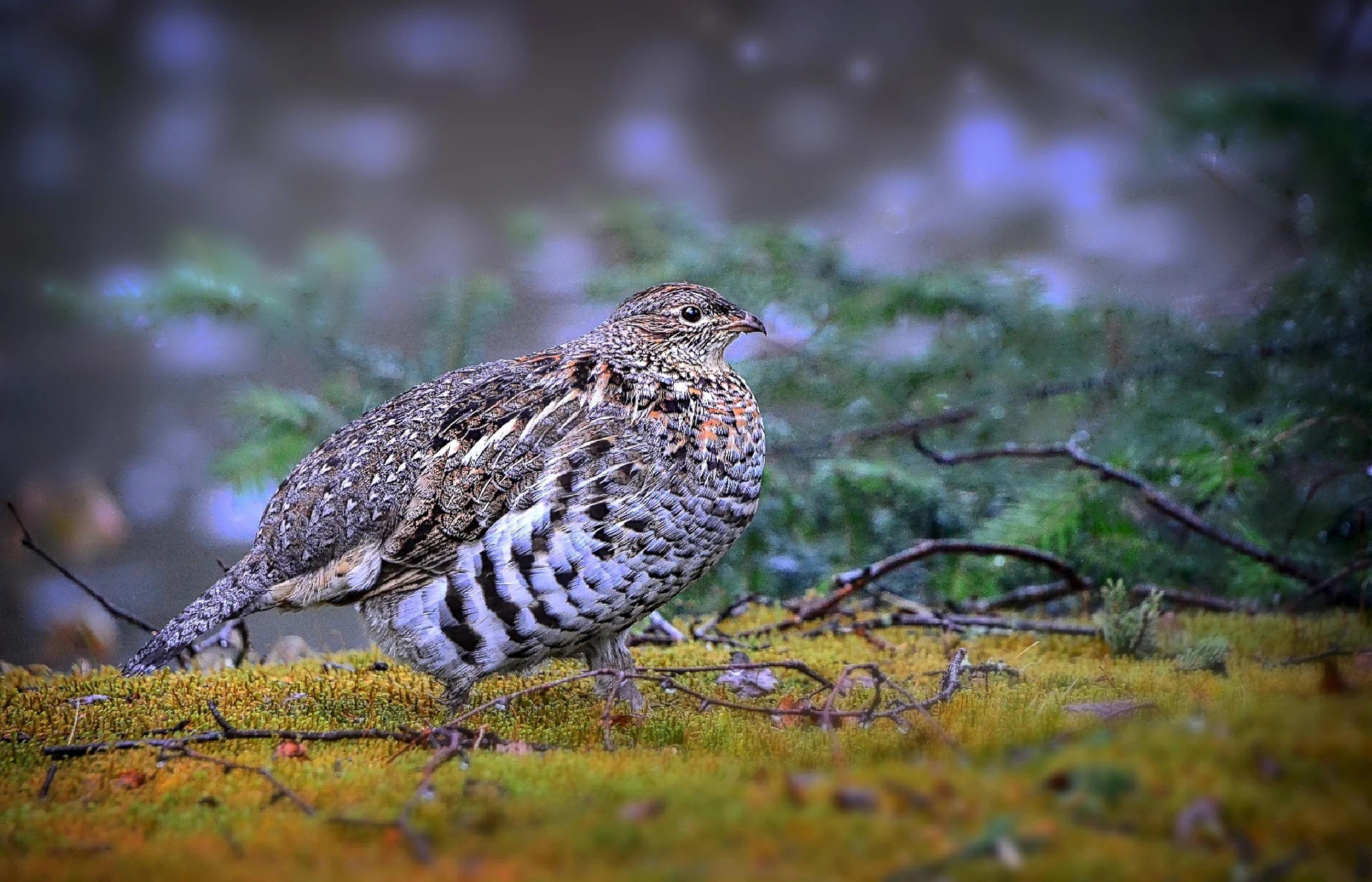
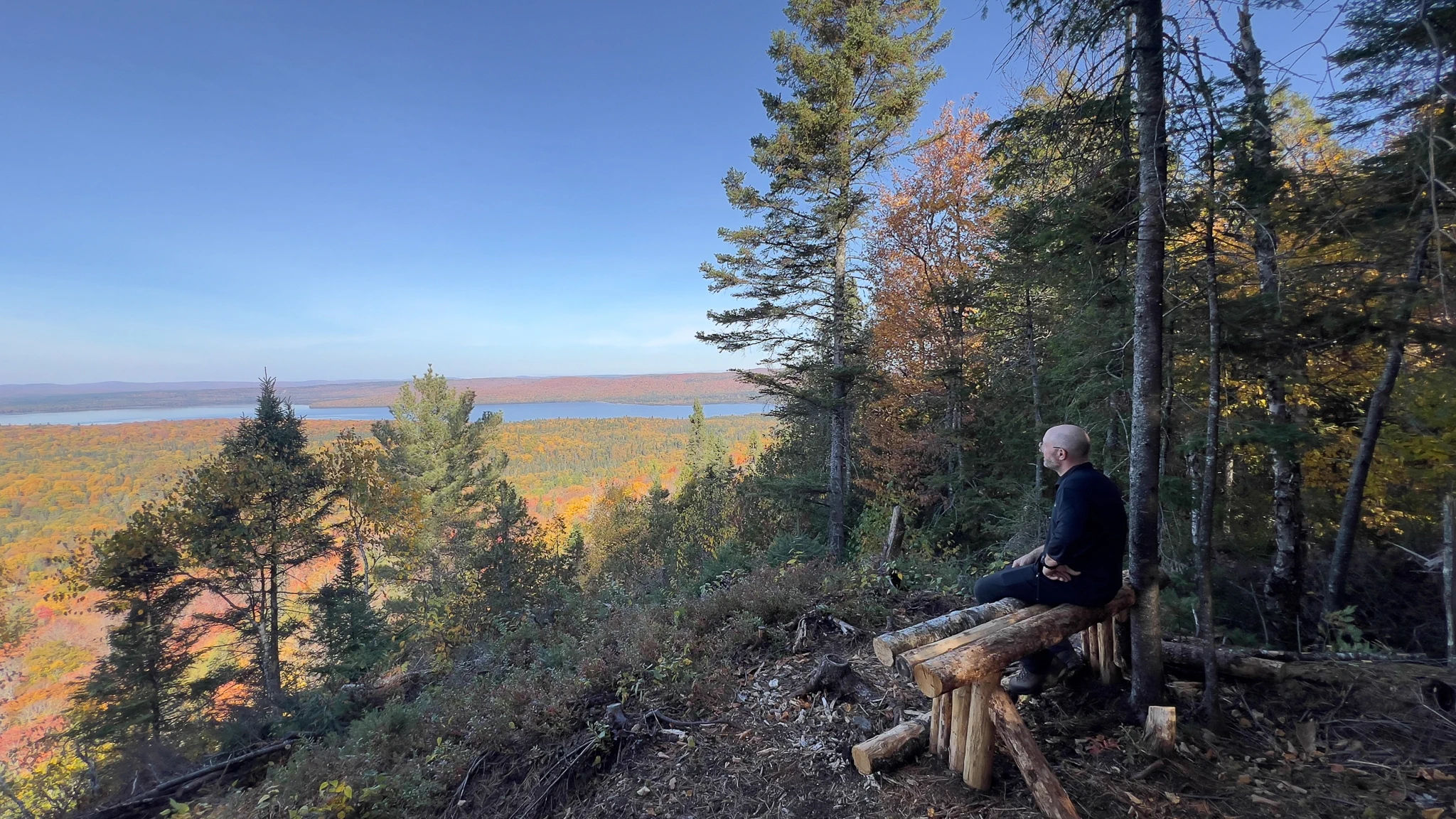
What matters for partridge is the trail network and what grows along the edges. Recent cuts, regrowth, aspen edges. Mostly a mix of conifers and deciduous trees: conifers to hide, deciduous to feed. We change sector three times in the same day without ever passing the same spot. And since we almost always split up, alone or in pairs, nobody steps on each other's toes. The ruffed grouse, called partridge around here, shares the land with woodcock and hare.
A day on partridge
In the morning, we check in with the team. Which sectors did hunters use yesterday? Trail conditions, open sectors, instructions.
We leave early. My best harvests came shortly after sunrise or late in the day, when partridges hold more willingly along trail edges. The explanation you hear is gravel: partridge swallow it to grind their food, and a forest road offers plenty. Sun warming the gravel at first light would do the rest. I have not verified it, but it fits what I see.
That said, my father-in-law has a better answer than mine. The best time to hunt, he says, is when you turn the door handle to go.
After that, it is our pace. We move along a trail, watch the edges, keep an eye on young woods. One sector, then another. Partridge demands attention and good reading of the terrain, but it also leaves room for breaks and conversation. It is a hunt that lets you talk.
The daily limit in Québec is five grouse per hunter. Fifteen in possession. We reached it almost every day.
The territory lives up to its reputation, let us say that. For us, the difficulty was never flushing birds; it was deciding when to stop. The quota remains a ceiling. Nobody in the group treats it as a target to hit.
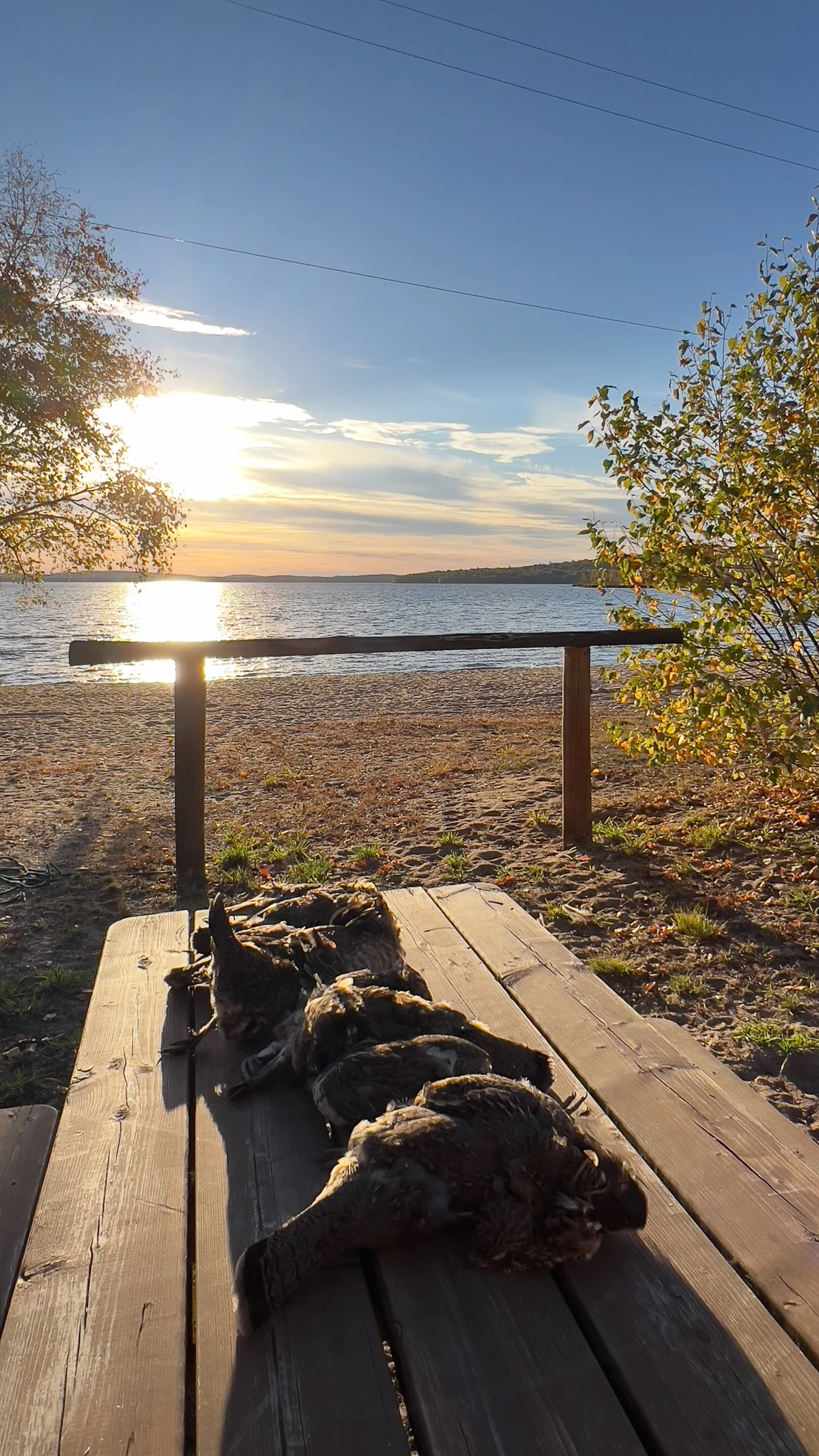
Three days at five birds per hunter would make fifteen. The possession limit to the number. We do not get there, and that is intentional: part of the harvest never leaves the territory; we eat it on site.
No day resembled the previous one. Weather shifts, the woods change from sector to sector, and knowing where to look helps a lot without ever guaranteeing anything. Interesting and frustrating in the same morning, sometimes.
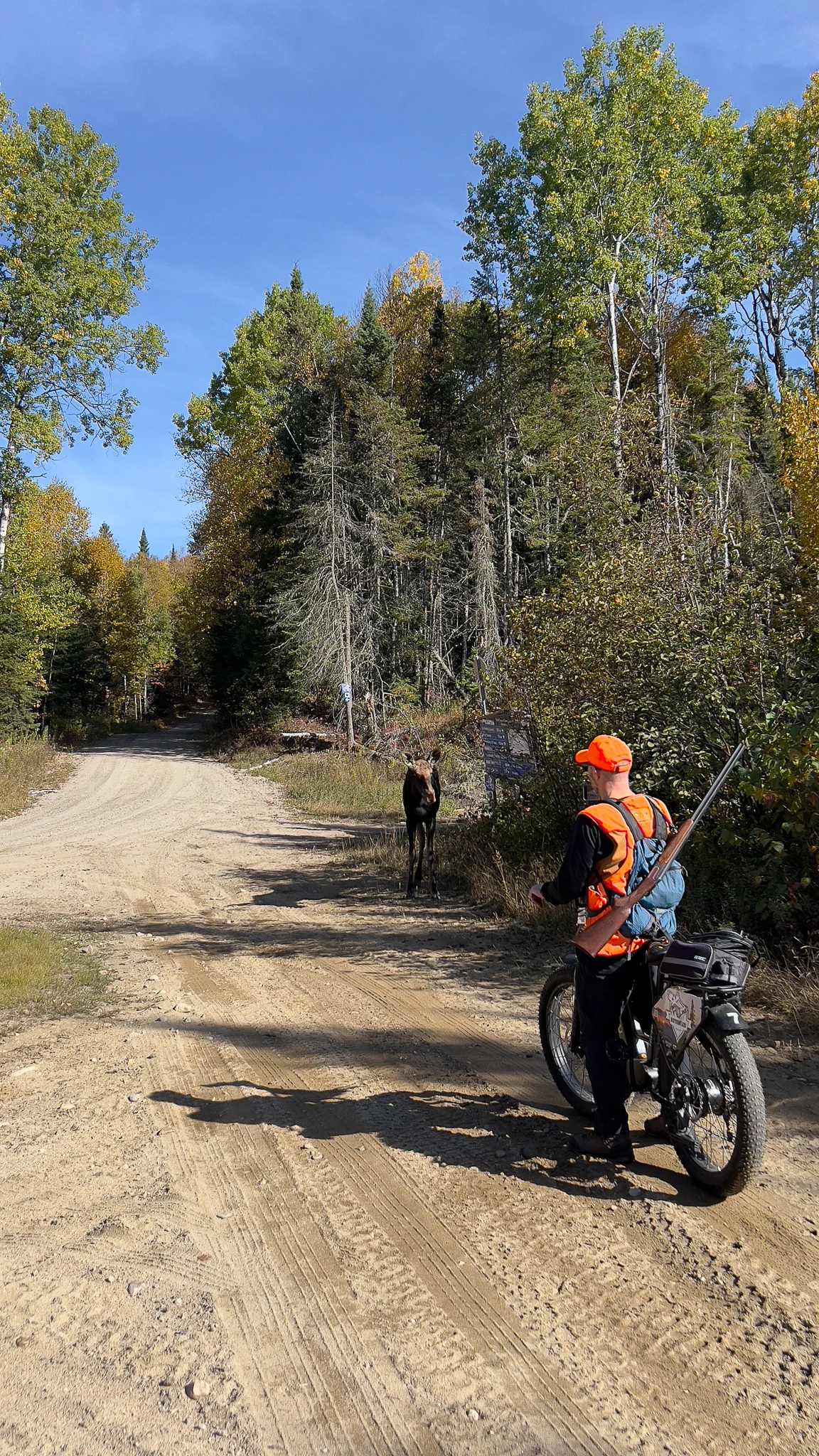
E-bike, side-by-side, walking: three ways to cover the territory
On a partridge stay, I do not hunt two days the same way.
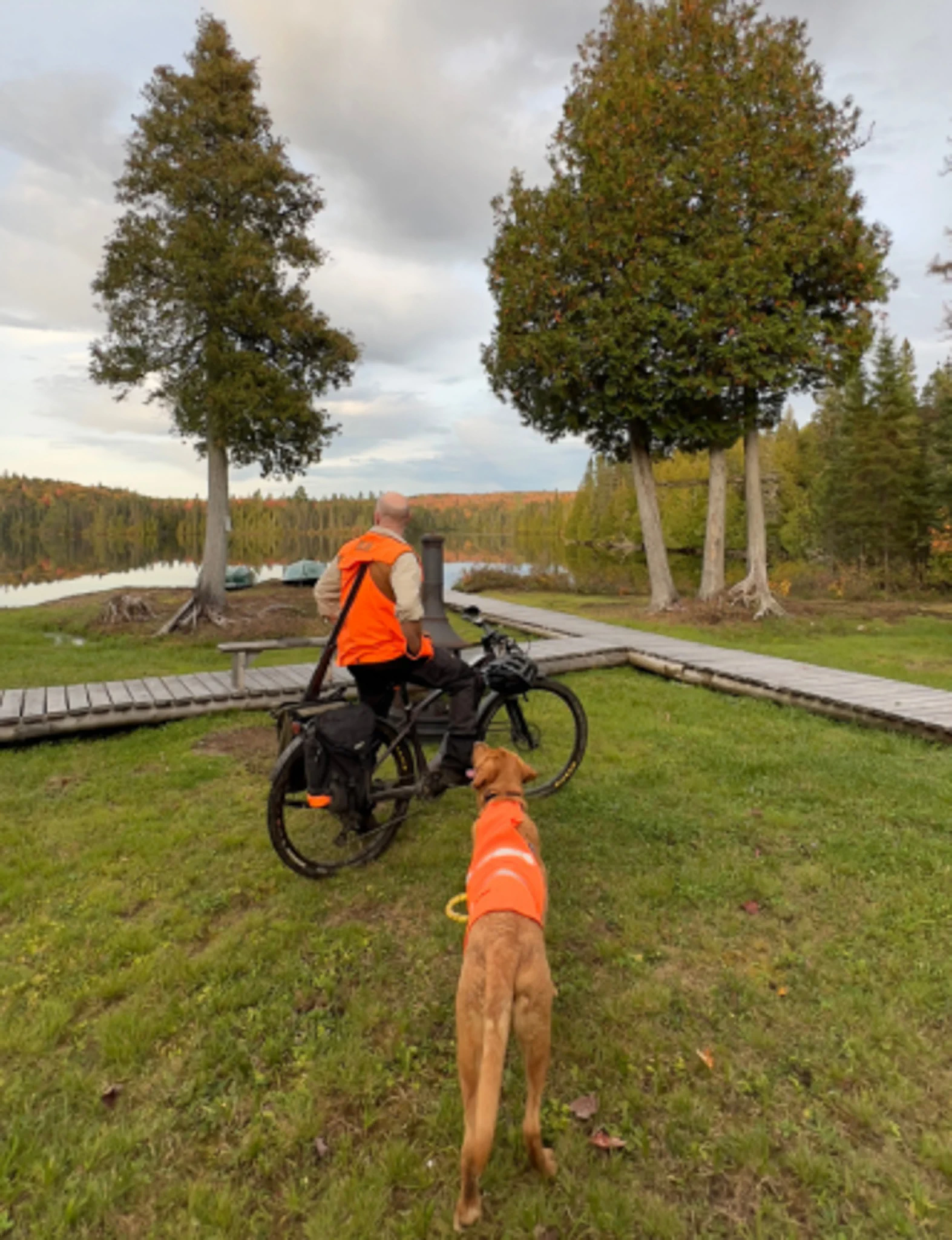
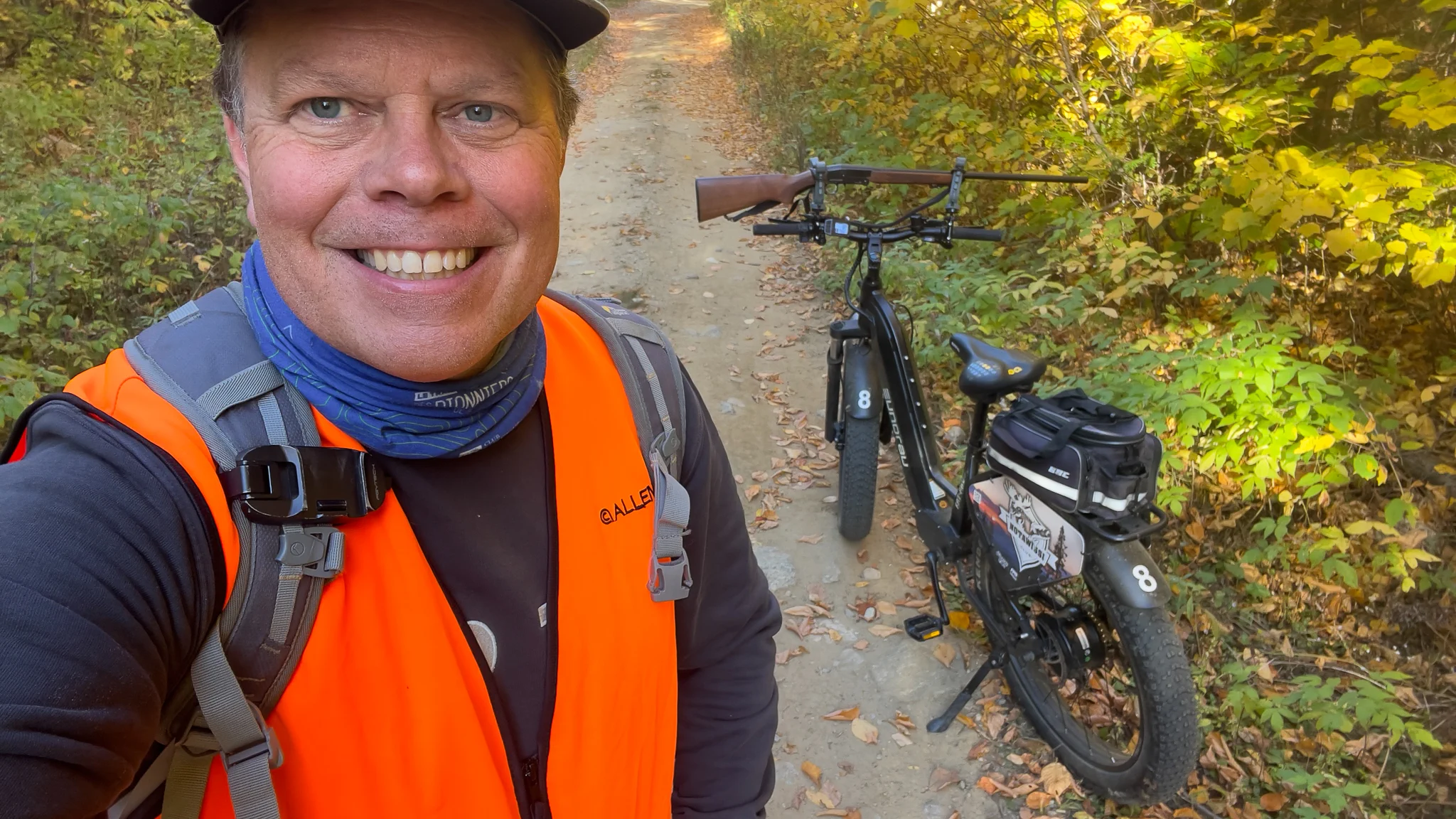
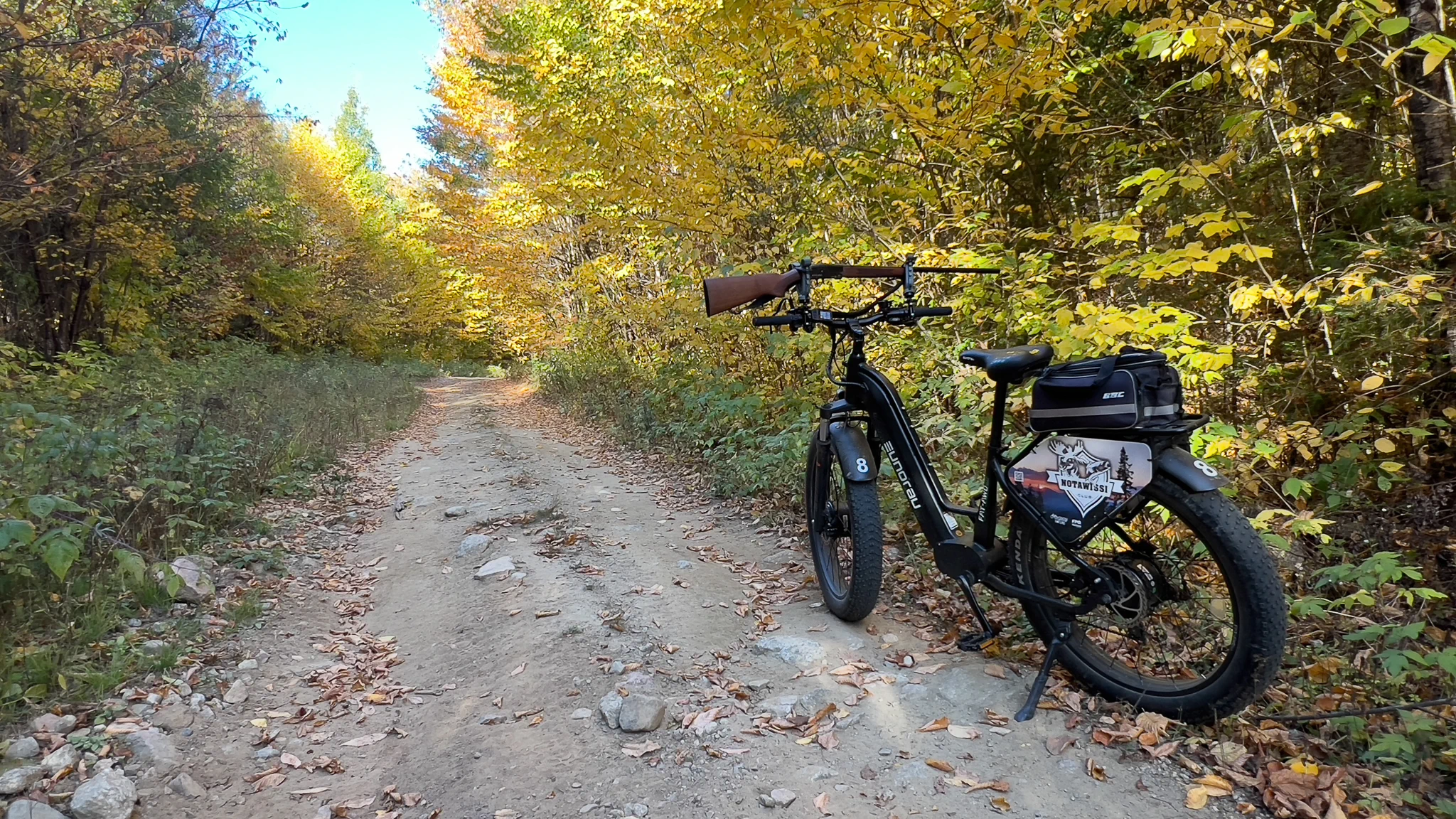
Nearly half the time, I take the electric-assist bike. It is my preferred way, by far. We exceed 30 km/h on the trails, with enough range to last the day without thinking about it. About thirty kilometres on an ordinary day. About forty when we push. We ride, spot an edge that looks good, lean the bike against a tree, walk the sector, come back, head to the next. Three or four sectors in a day instead of one.
The bikes are equipped for hunting: a mount for the firearm, a basket for harvests. Nothing on our backs. Sometimes you can put your gun in the basket if you prefer that to the handlebar mount.
And there is the exercise, which matters to me. We come back in the evening with legs that have worked.
Other days, it is the off-road vehicle, the side-by-side. It goes farther, faster, and carries people with gear and harvests. We drive to the target sector, get out, walk. It is for getting there. Never for shooting. Bike or side-by-side, we end up just as far; what changes is the effort we put in and the noise we make.
In both cases, we walk. A lot. And that is fine.
Our second day sums up the method fairly well. We left by side-by-side, without coming back for lunch. The day before, we had asked for packed lunches, and that changed everything: no midday round trip, so no hours lost on the trails, and access to the most remote parts of the territory. The side-by-side links one sector to another and carries everything, lunches and cooler. Once there, we walk trails almost nobody uses. The only reason is they are too far for a half day.
Lunches, by the way, are the kind of thing to request before you arrive. By the day before at latest.
The Notawissi team confirms before the stay the availability of bikes, accessible sectors, rental terms and required safety equipment. Conditions vary with weather and trail state.
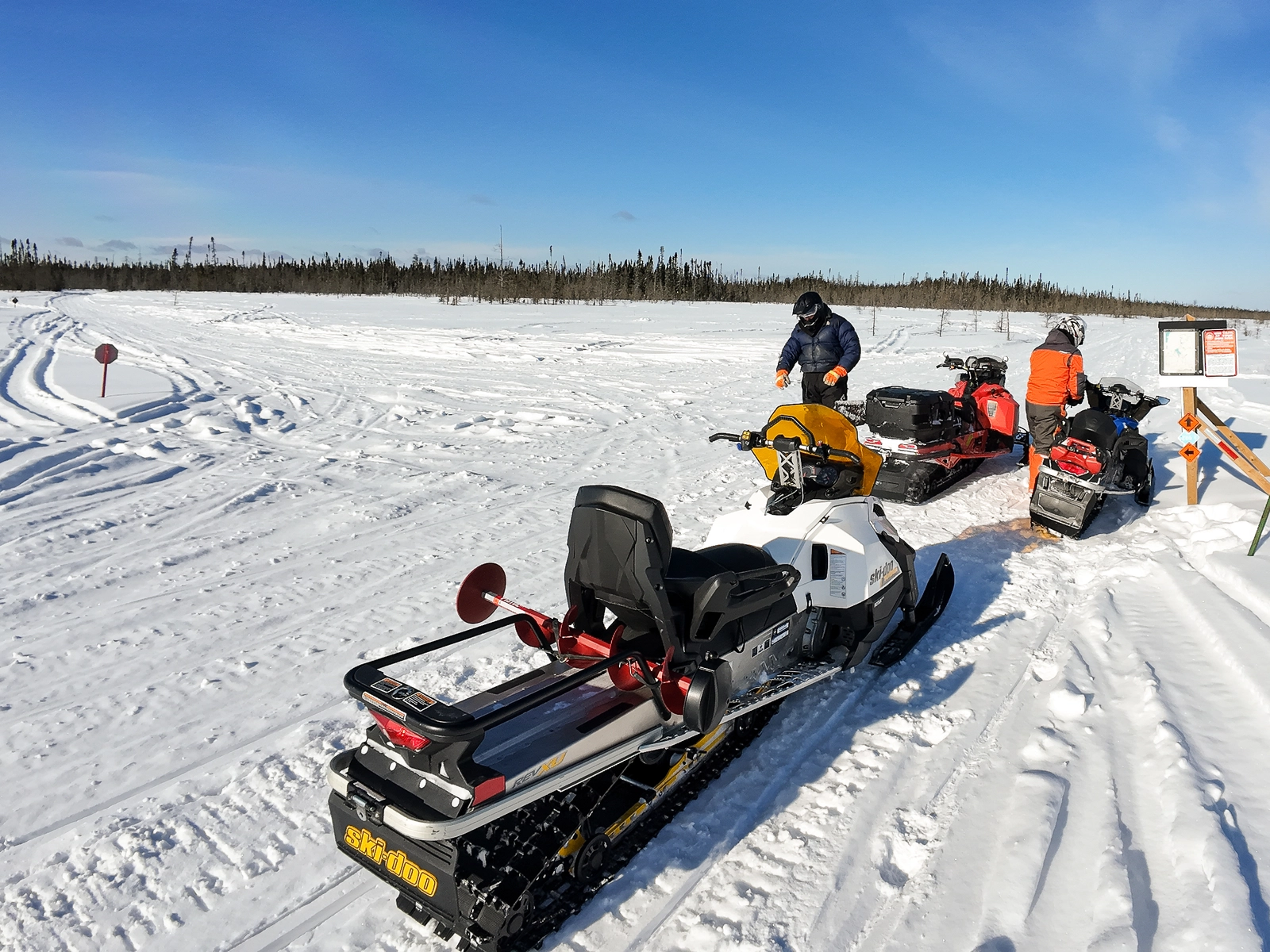
In the same hunting family, in winter, another experience: Snaring hare in Québec, five days in the real woods of the Laurentian Highlands.
How partridge shows up
Three situations come back, stay after stay.
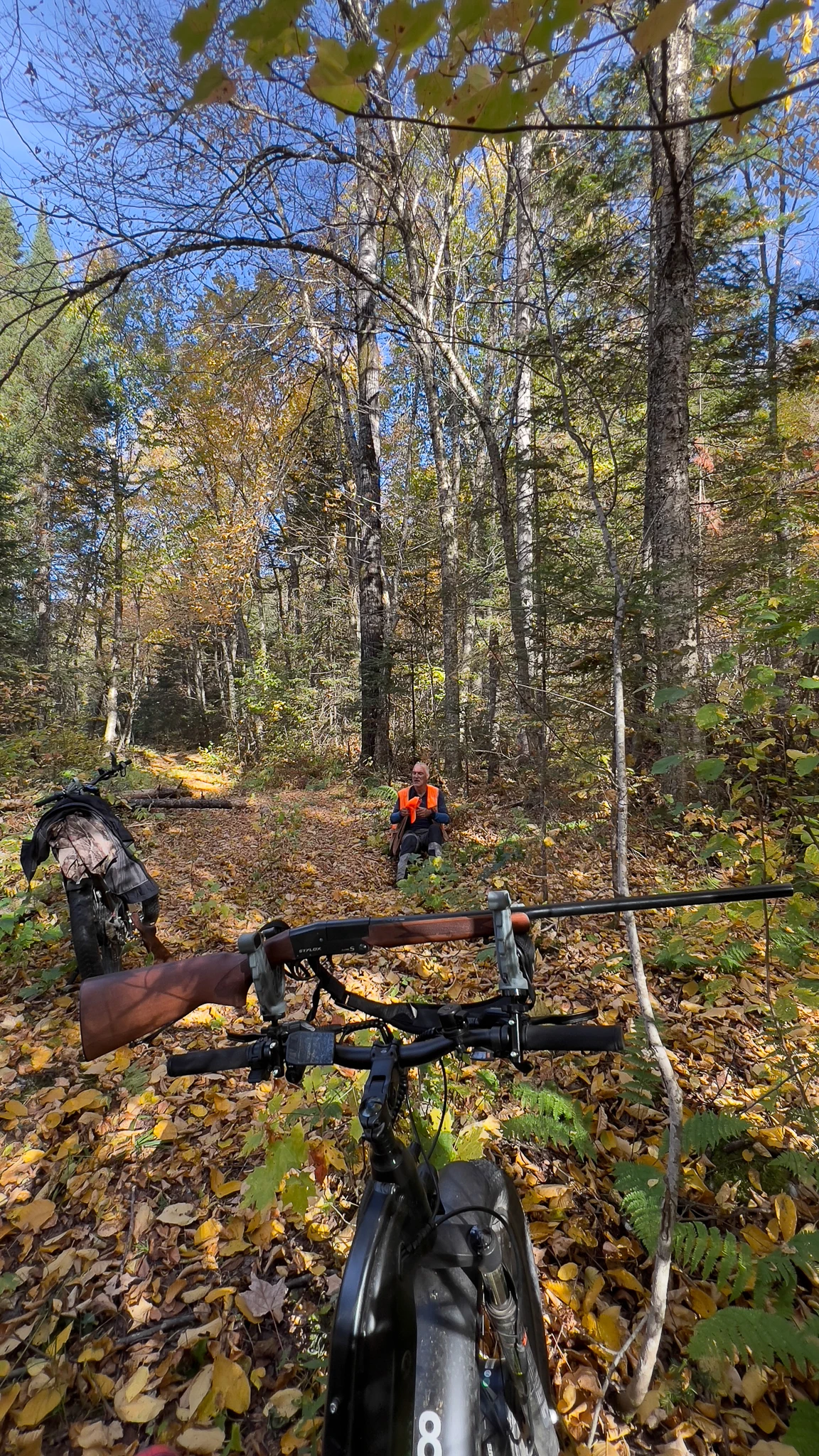
At least a third of my harvests happen along the trail edge. I spot it from afar while riding, stop, set the bike down, advance quietly. That is where it plays out. The mistake is trying to get too close: it flushes and you lose it. Better to trust yourself and shoot from a bit farther. I have lost enough birds to learn that.
The bike helps a lot with this. It rolls slowly; you have time to see. And quietly, so the bird is not already gone when you get off.
When it walks into the woods instead of flying, you follow gently. With two people, you advance in a beat, each on your side.
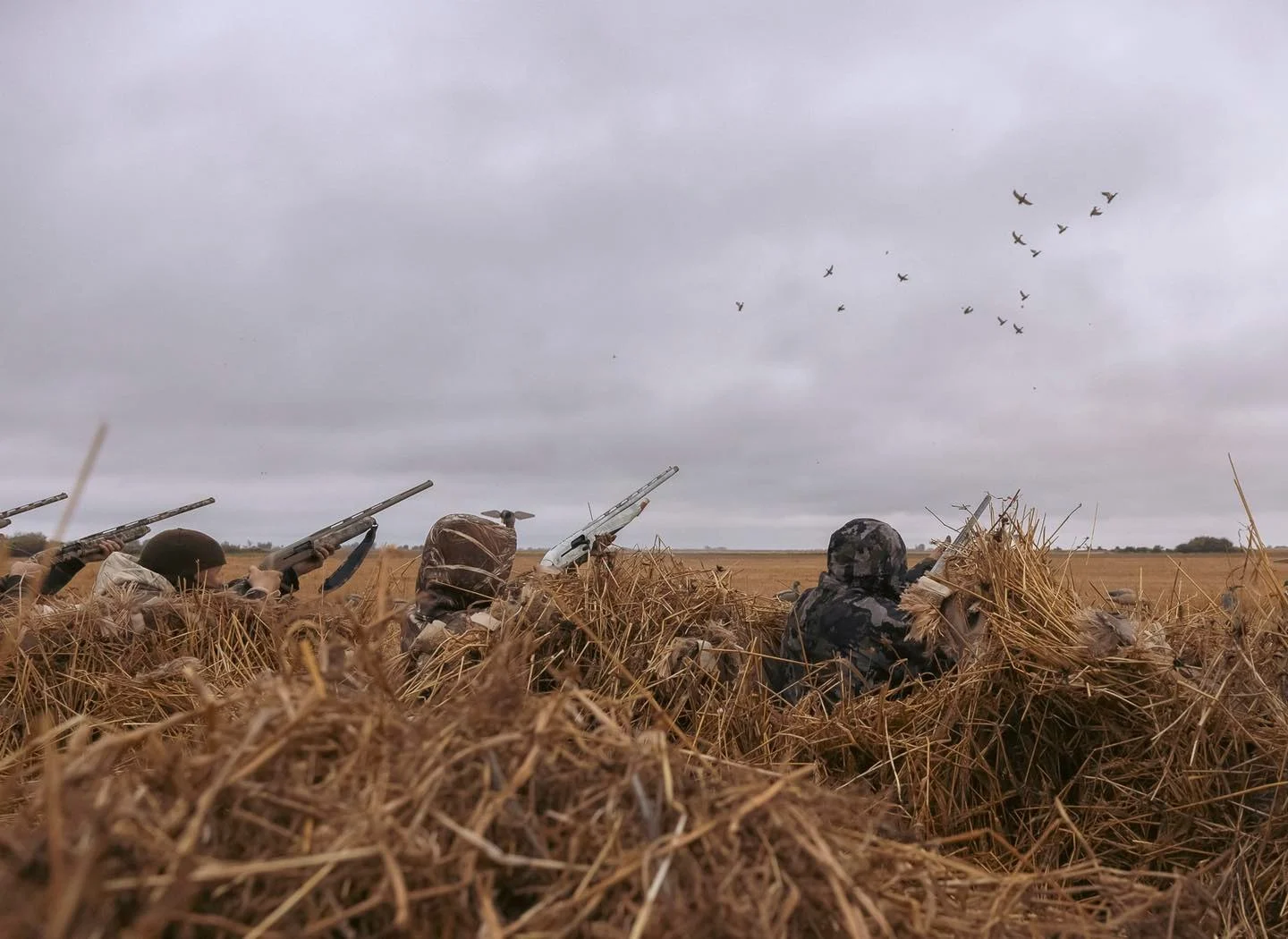
Otherwise it flushes in front of us and takes off in flight. When you miss, the reflex is to follow the flight with your eyes to the end. Often it perches, and you find it motionless in a tree a little farther on.
Evening, fire and partridge stew
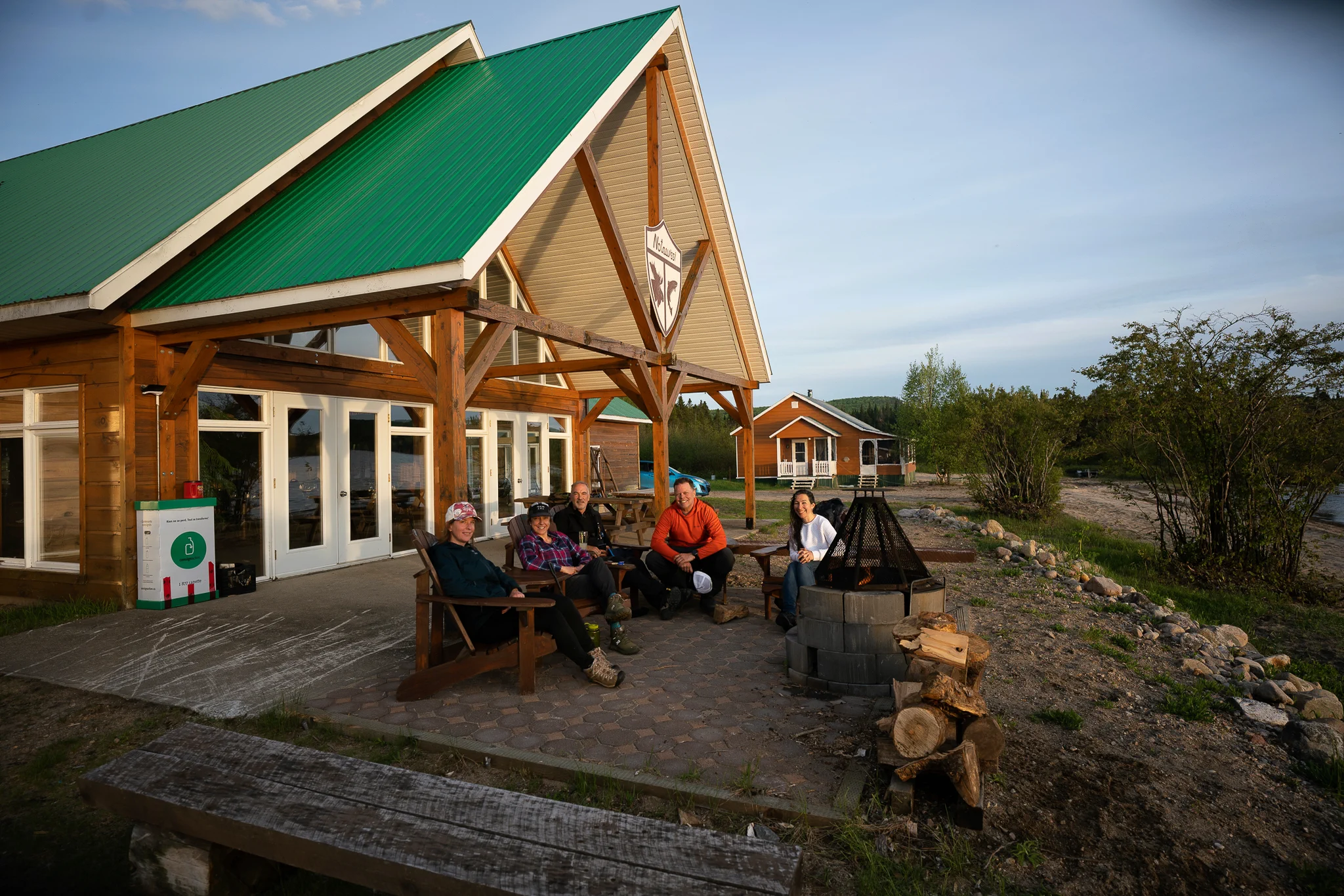
We come back at dusk. Boots by the door, gear put away, and finally time to settle.
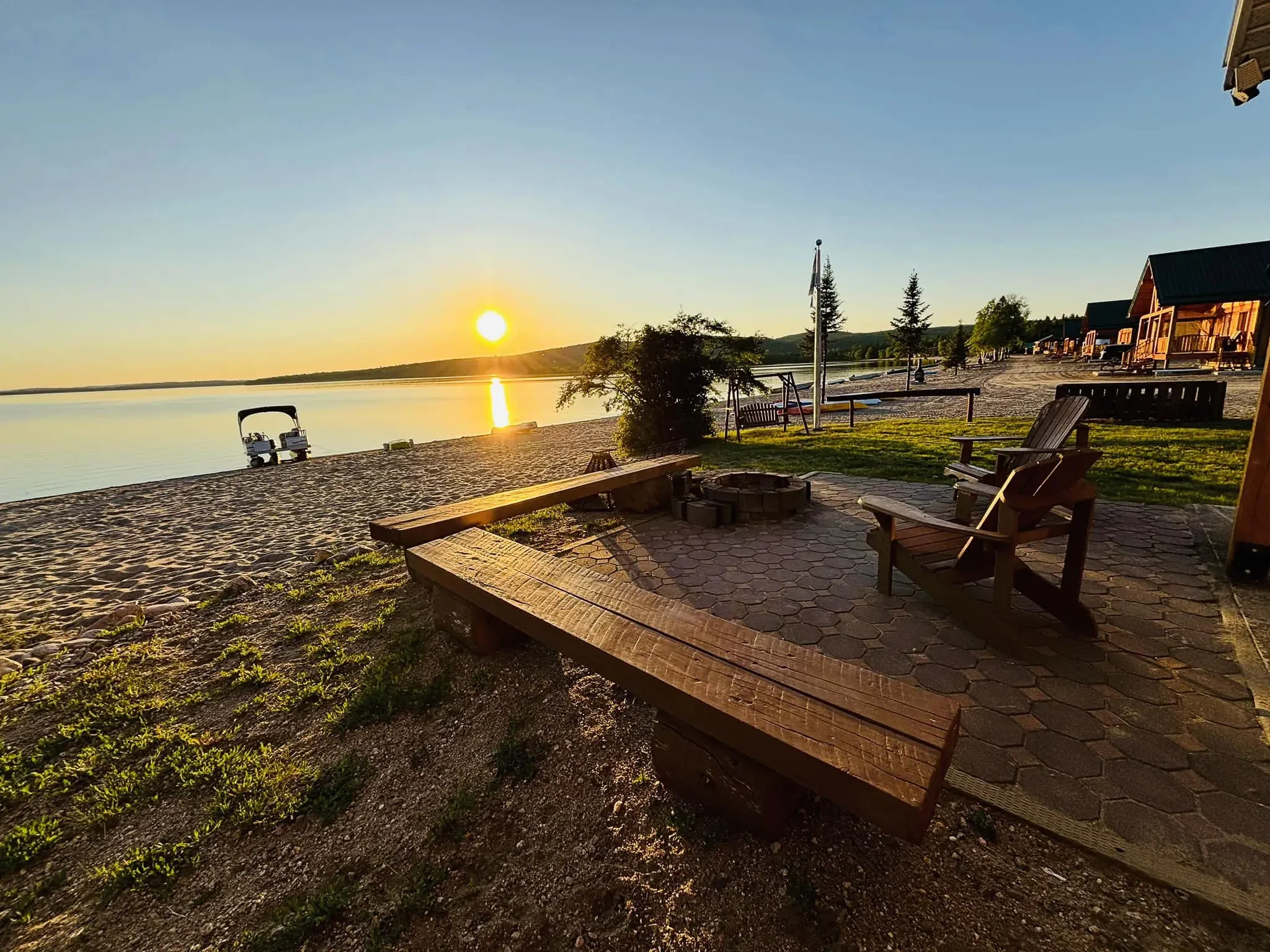
The cottages are on the main site, by the lake. Kitchen, living room, bathroom, wood stove or fireplace. Notawissi offers the American plan, meals included, and the European plan, where you cook yourself. We take the second. Except the first evening at the lodge, all our meals are at the cottage, and that is part of what we come for too.
Before cooking, there is plucking. I do it at the end of the day, on spread newspaper: everything is gathered at once, feathers and offal included. We then clean under water, looking for lead pellets that sometimes remain in the meat. The meat goes into small airtight bags. Part for the stay's dinners, part for the trip home.
At least one dinner is partridge. Most often a stew, which takes its time and is well worth the wait. As a starter, partridge croquettes with a well-chilled white wine. Our appetizer while the rest simmers. Cut the meat in small pieces, olive oil and Panko breadcrumbs: excellent. What we flushed in the morning ends up on the plate in the evening.
Afterward, we go out around the fire. That is where the day is really told: we compare sectors, replay missed shots, decide where to go tomorrow. Then the eternal board games, inside. Settlers of Catan this time, like almost every trip. We go to bed early, and nobody complains.
What to know before you come
Notawissi offers two small-game package periods in autumn: mid-September to early October, then late October to late November. Exact dates for the current year are on the outfitter page.
The two blocks are not hunted the same way. Early autumn, the forest is multicoloured and a pleasure to walk through, but foliage hides birds. Later, leaves are on the ground and it is colder. In exchange, a thin layer of snow often falls, tracks become visible on the ground, and following partridge becomes much easier. I still choose early autumn. For the colours.
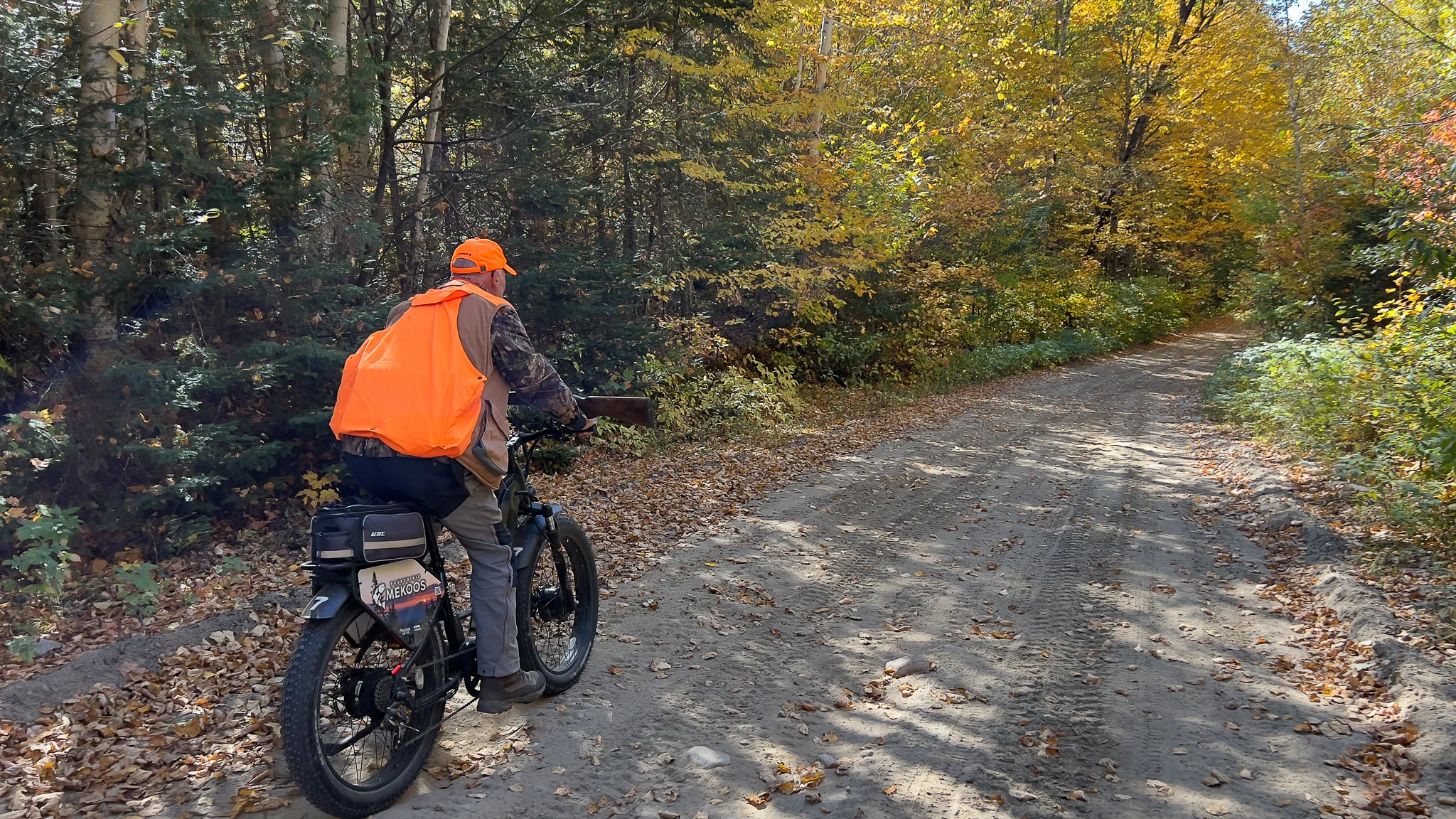
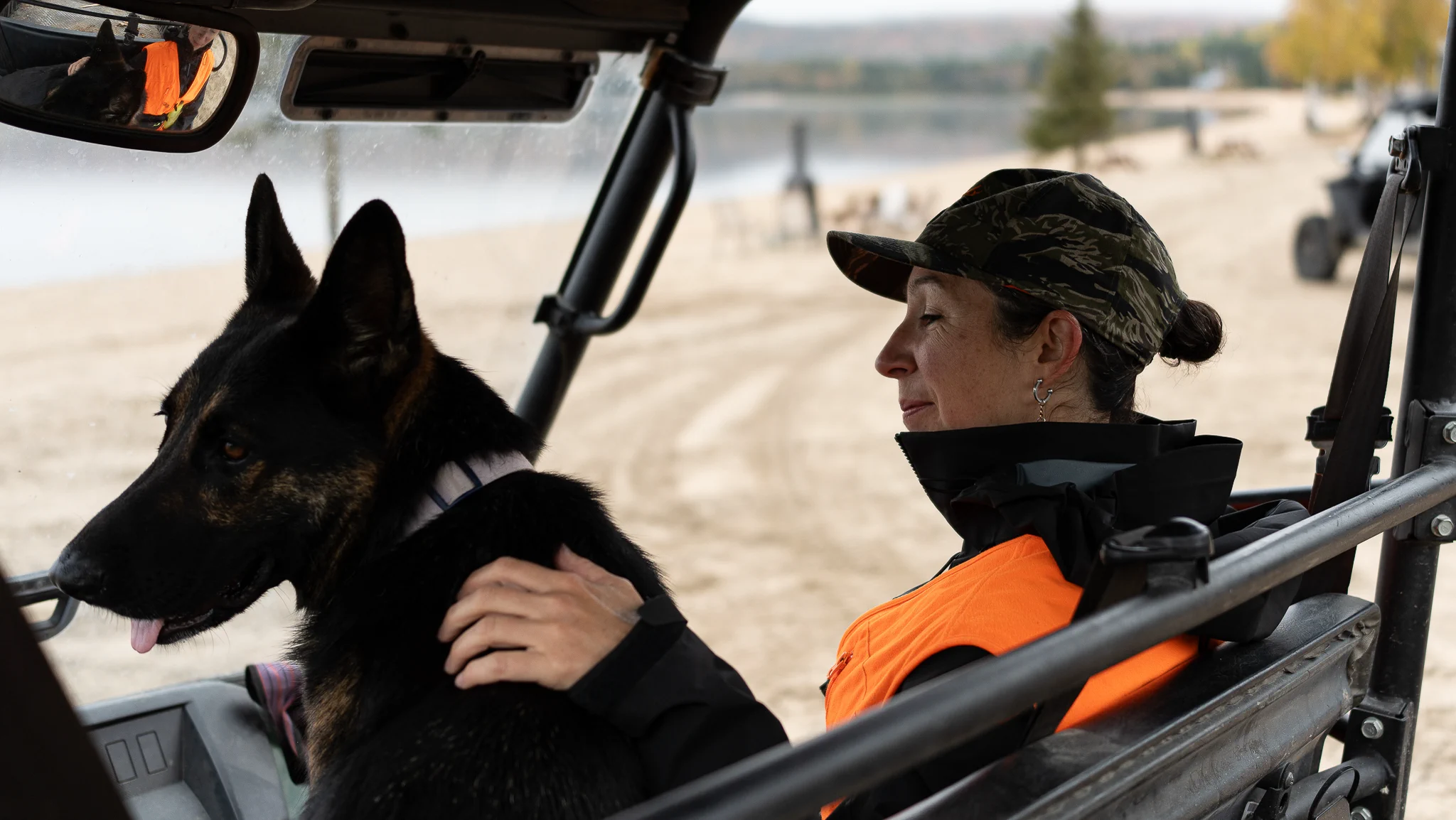
Packages combine cottage lodging, hunting rights and access to exclusive territory, for a minimum two-day stay, with or without meals depending on the formula. Hunting dogs are accepted, with a supplement.
For equipment, nothing exotic:
- clothing for temperature swings and high-visibility gear compliant with regulations;
- boots that hold up on trails and in underbrush;
- water, snacks, a first-aid kit;
- navigation and communication gear;
- cooking supplies if you take the European plan;
- a cooler and airtight bags for the return trip;
- dog supplies, if applicable.
If you cook at the cottage, do your grocery shopping before heading up. Mont-Laurier is the last major town on the route, and the territory starts quite a bit farther on.
Each participant must hold their own licence. The harvest limit is five grouse, spruce grouse or gray partridge per day, and fifteen in possession at all times. Rules on firearms, ammunition and seasons fall under current Québec regulations.
What I take away from it
A few bags of meat in the cooler. Then, once home, a partridge dinner at home.
We share with those who were not there. My family, close friends. We eat, and I tell the story of the territory, the forty-kilometre day, the fire, the stew at the cottage. They listen longer than I expected.
And almost every time, someone ends up asking if they can come next autumn.
👉 Check availability at Notawissi
👉 Discover our hunting packages, or Explore ethical hunting at Mitik

'/%3e%3cpath%20d='M19.0957%209.92969L25.1657%2015.9997L19.0957%2022.0697'%20stroke='white'%20stroke-width='1.5'%20stroke-miterlimit='10'%20stroke-linecap='round'%20stroke-linejoin='round'/%3e%3cpath%20d='M8.16602%2016H24.996'%20stroke='white'%20stroke-width='1.5'%20stroke-miterlimit='10'%20stroke-linecap='round'%20stroke-linejoin='round'/%3e%3cdefs%3e%3clinearGradient%20id='paint0_linear_40000784_6671'%20x1='1.38396'%20y1='32'%20x2='31.1276'%20y2='1.33333'%20gradientUnits='userSpaceOnUse'%3e%3cstop%20stop-color='%23FDB62F'/%3e%3cstop%20offset='0.498405'%20stop-color='%23CF9033'/%3e%3cstop%20offset='1'%20stop-color='%23FDB62F'/%3e%3c/linearGradient%3e%3c/defs%3e%3c/svg%3e)